
close
Choose Your Site
Global
Social Media

Views: 194 Author: Site Editor Publish Time: 2025-05-30 Origin: Site


In the cable manufacturing and assembly industry, cable coiling machines play a critical role in maintaining production efficiency and ensuring neatly organized cable products. As demand for productivity increases, manufacturers must choose between manual and automatic cable coiling machines. This decision directly impacts workflow, labor intensity, product consistency, and scalability. In this article, we will explore in-depth the key differences between these two types of machines, highlight their advantages and limitations, and examine how innovations like PVC cable coiling machines, high-performance cable coiling machines, and small cable coiling machines are reshaping industrial cable handling operations.
Cable coiling machines are mechanical devices used to wind cables, wires, or hoses into uniform coils. These machines are indispensable in industries such as telecommunications, power transmission, construction, and electronics. A well-designed coiling machine ensures that cables are packaged in a way that avoids tangling, reduces damage during transport, and improves storage efficiency.
There are two primary types of cable coiling machines:
Manual cable coiling machines
Automatic cable coiling machines
Each type serves a specific purpose and is designed for different operational needs. The choice between them depends on production volume, labor availability, and the level of precision required.
Manual cable coiling machines rely on human operation for most of their functions. The operator manually feeds the cable, controls the coiling speed, adjusts the coil diameter, and often handles the tying or strapping after coiling.
Low cost: Ideal for small businesses or workshops with limited budgets.
Compact size: Often used as small cable coiling machines due to their portability.
Flexible operation: Operators can easily switch between cable types without software programming.
Suitable for custom cable sizes: Especially for specialized or short production runs.
Labor-intensive: Requires constant attention and manual adjustments.
Inconsistent coil quality: Results may vary depending on operator skill.
Lower throughput: Not ideal for high-volume industrial applications.
Ergonomic strain: Extended manual handling can lead to operator fatigue.
Manual coilers are a good fit for occasional cable winding needs or settings where customization is more important than speed.

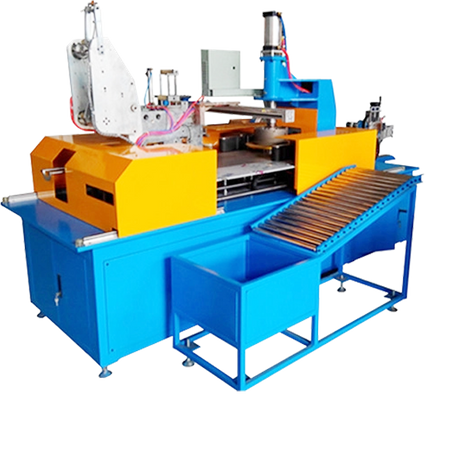
As technology has evolved, automatic cable coiling machines have become the preferred choice in high-speed, high-volume manufacturing environments. These machines automate most, if not all, of the coiling process—from cable feeding and measuring to coiling and even tying.
Programmable logic controls (PLC) for precise coil dimensions.
Consistent output quality, regardless of operator input.
Higher speed and efficiency, increasing productivity by up to 80%.
Integrated cutting and packaging in some high-performance models.
Compatible with multiple materials, including PVC, rubber, and fiber optic cables.
Automatic models are commonly used as industrial cable coiling machines in large-scale factories, especially where precision and speed are critical.
| Feature | Manual Cable Coiling Machine | Automatic Cable Coiling Machine |
|---|---|---|
| Operation Mode | Human-operated | Fully automated with minimal supervision |
| Speed | Low to medium | High (up to 5x faster) |
| Accuracy | Depends on operator skill | Consistent and programmable |
| Cost | Low initial cost | Higher upfront investment |
| Maintenance | Simple | Requires periodic technical servicing |
| Ideal Use Case | Small runs, custom coils | Mass production, precision needs |
| Cable Compatibility | Wide, manual adjustments needed | Wide, software-driven adaptability |
This comparison shows why automatic models, such as high-performance cable coiling machines, are revolutionizing cable handling, especially in automated production lines.
Different applications require tailored coiling solutions. Here's a breakdown of specialized machine types:
Designed specifically for handling PVC-insulated cables, these machines ensure that the cable's outer sheath remains intact during the coiling process. Their precise tension control prevents stretching or damage to the PVC layer.
Benefits:
Perfect for household and commercial wiring.
Smooth and frictionless cable handling.
Compatible with flat or rounded PVC cables.
These are the powerhouses of the industry. Engineered for speed, accuracy, and 24/7 operation, they often include auto-diagnosis systems, touchscreen interfaces, and advanced servo motors.
Use Cases:
Fiber optic cable manufacturing.
Telecom and power cable assembly lines.
Aerospace and defense cable production.
When space and budget are constraints, small cable coiling machines offer an ideal solution. These machines retain essential features like tension control and coil adjustment but in a compact footprint.
Perfect for:
Small workshops or mobile operations.
Custom repair shops.
Training and educational use.

Yes, but you must handle them with care. Manual machines don’t offer the same tension control as specialized PVC cable coiling machines, which could lead to damage if the operator isn't experienced.
Regular maintenance includes lubricating moving parts, checking for wear and tear on belts or rollers, and updating software (if applicable). High-performance models often feature self-diagnostic alerts to streamline maintenance.
Absolutely—if your production volume is growing or you need to improve consistency and reduce labor costs. The long-term ROI from increased output and reduced errors often outweighs the initial cost.
With proper maintenance, both manual and automatic machines can last 8–15 years. Industrial models may last even longer under optimal working conditions.
Choosing between a manual and an automatic cable coiling machine isn’t just about price. It's a strategic decision that impacts your operational efficiency, workforce management, and production scalability.
Go manual if you're operating a small-scale workshop or need maximum flexibility.
Opt for automatic if you require consistent output, want to scale operations, or are handling sensitive materials like PVC cables.
In today’s competitive industrial landscape, more companies are transitioning to industrial cable coiling machines that combine speed with precision. If you’re looking to future-proof your cable production line, the automatic route is the way forward.